IPNET CYBER BATTLE 2026: Building a 24-Hour University CTF
Behind the organization of IPNET CYBER BATTLE 2026, a 24-hour team CTF with workshops, live technical rounds and new individual awards.
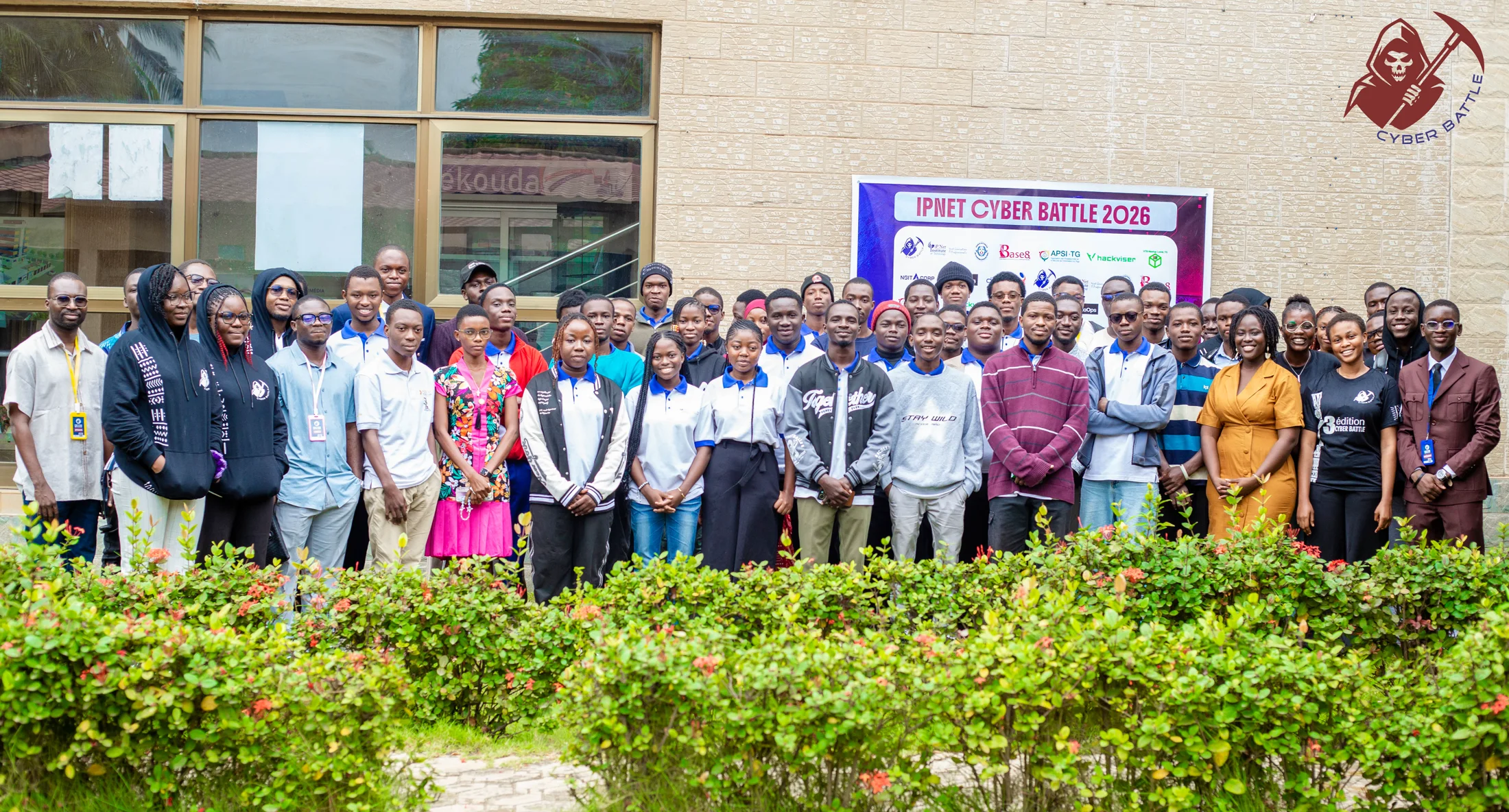
Hello, or good evening, depending on when you are reading this.
I want to write about an event that matters a lot to me: IPNET CYBER BATTLE 2026. The ranking is only the visible part of it. Behind the podium were weeks of preparation, ten teams with very different identities, a public workshop, technical rounds that went beyond a conventional CTF and a long night in which fatigue changed the way people worked together.
I led the organizing committee, so this is also my account of what we tried, what surprised us and what the participants taught us once the competition began.
What is IPNET CYBER BATTLE?
IPNET CYBER BATTLE is a cybersecurity hackathon organized by students of IPNET Institute of Technology for other IPNET students. The IPNET CYBER CLUB runs the event to give students a place to test what they have learned, work with tools used in practice and prepare for national, regional and international competitions.
I officially created the IPNET CYBER CLUB in 2024. We meet on Saturday afternoons to discuss cybersecurity and train on labs in web security, OSINT, forensics, cryptography, binary exploitation and steganography. CYBER BATTLE closes the club’s annual program by putting those lessons into a real competition environment.
The first edition lasted 12 hours and was played individually. For 2026, the organizing committee I led decided to change the format.
A theme rooted in Togo
This edition followed one theme: Togo’s cultural wealth through its histories, languages, dances, rites and ethnic groups.
We chose it because a cybersecurity competition can do more than test technical knowledge. Its challenges can carry local stories and give participants another way to engage with the country they represent. The goal was to build an event that felt rooted here, rather than reproduce a set of generic challenges with a new logo.
That idea also matched the club’s larger ambition. We are preparing students to represent Togo in national and international competitions. Technical ability matters, but so does knowing why and for whom we are building those skills.
Moving from 12 hours to 24
The largest change was the duration. The 2025 competition ran for 12 hours. The 2026 edition ran for 24 hours without interruption, from August 22 to 23.
It also became a team competition. Ten teams of three entered the event.
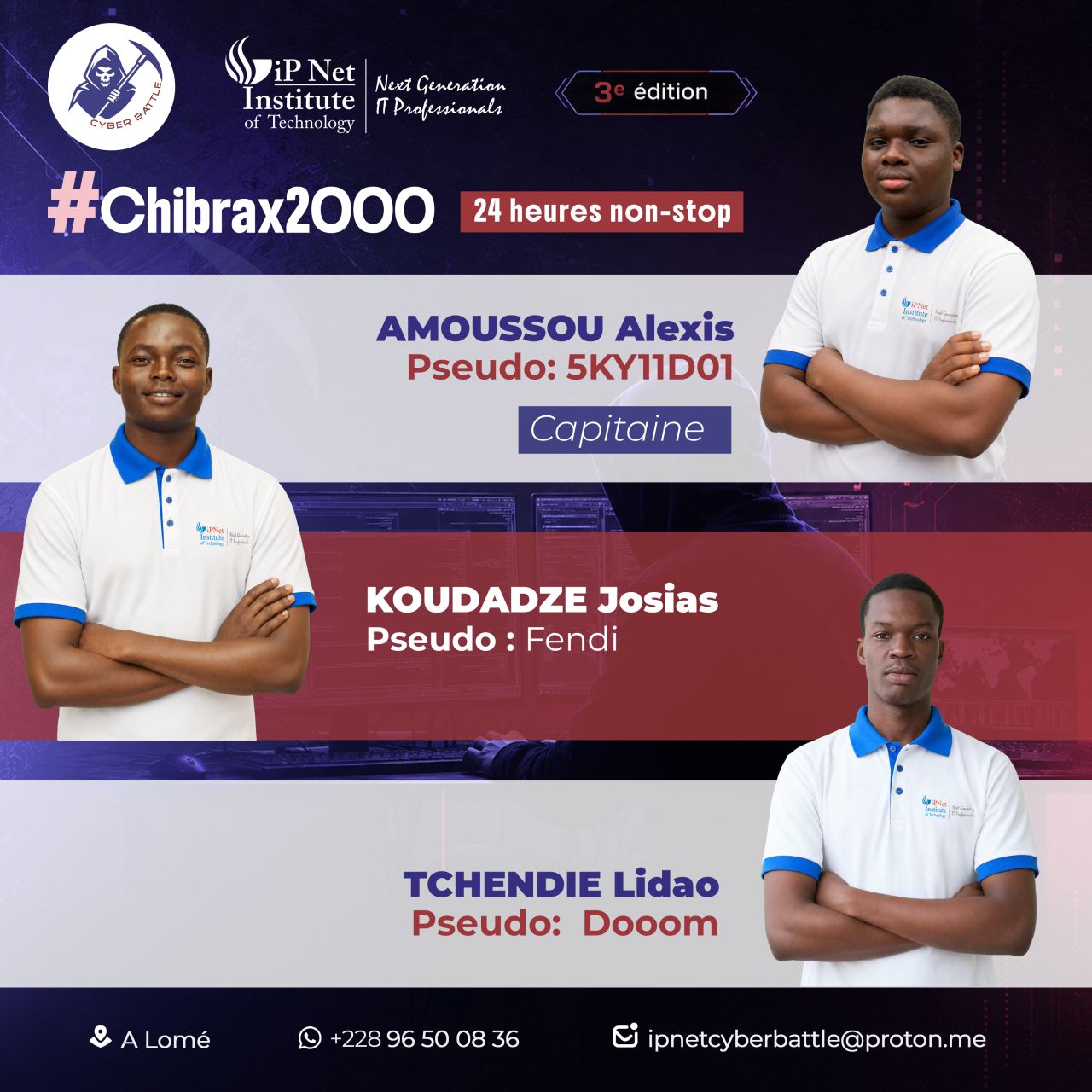
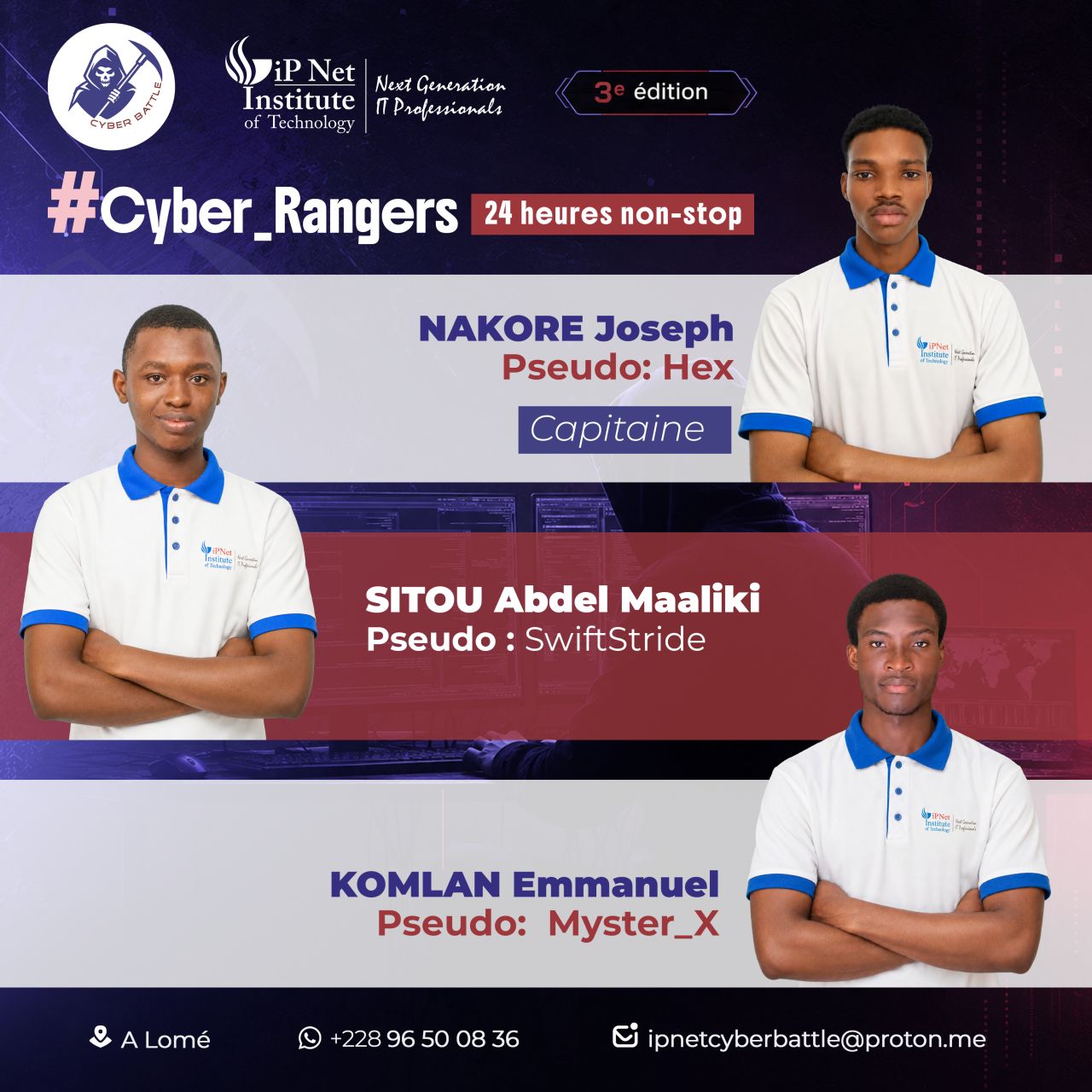
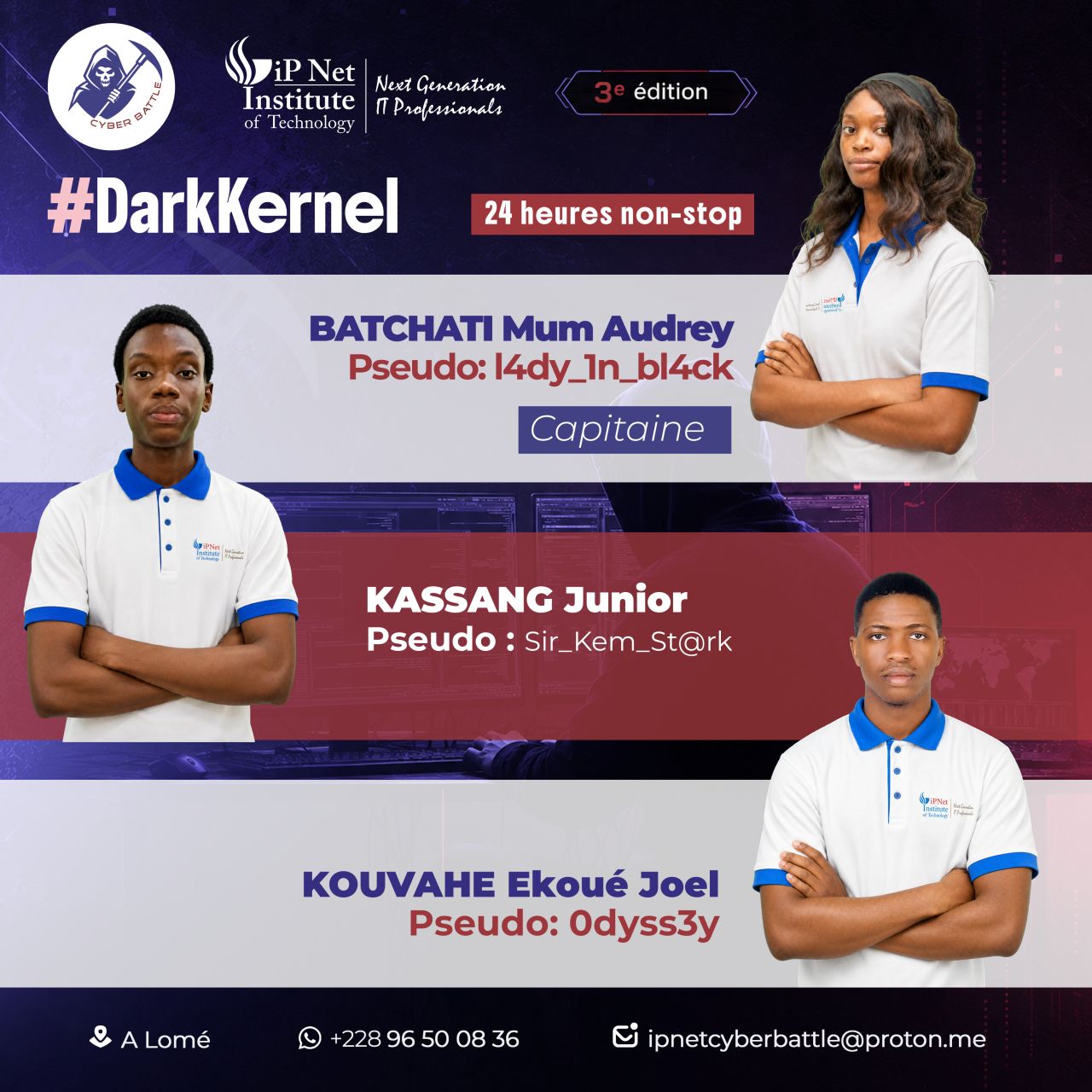
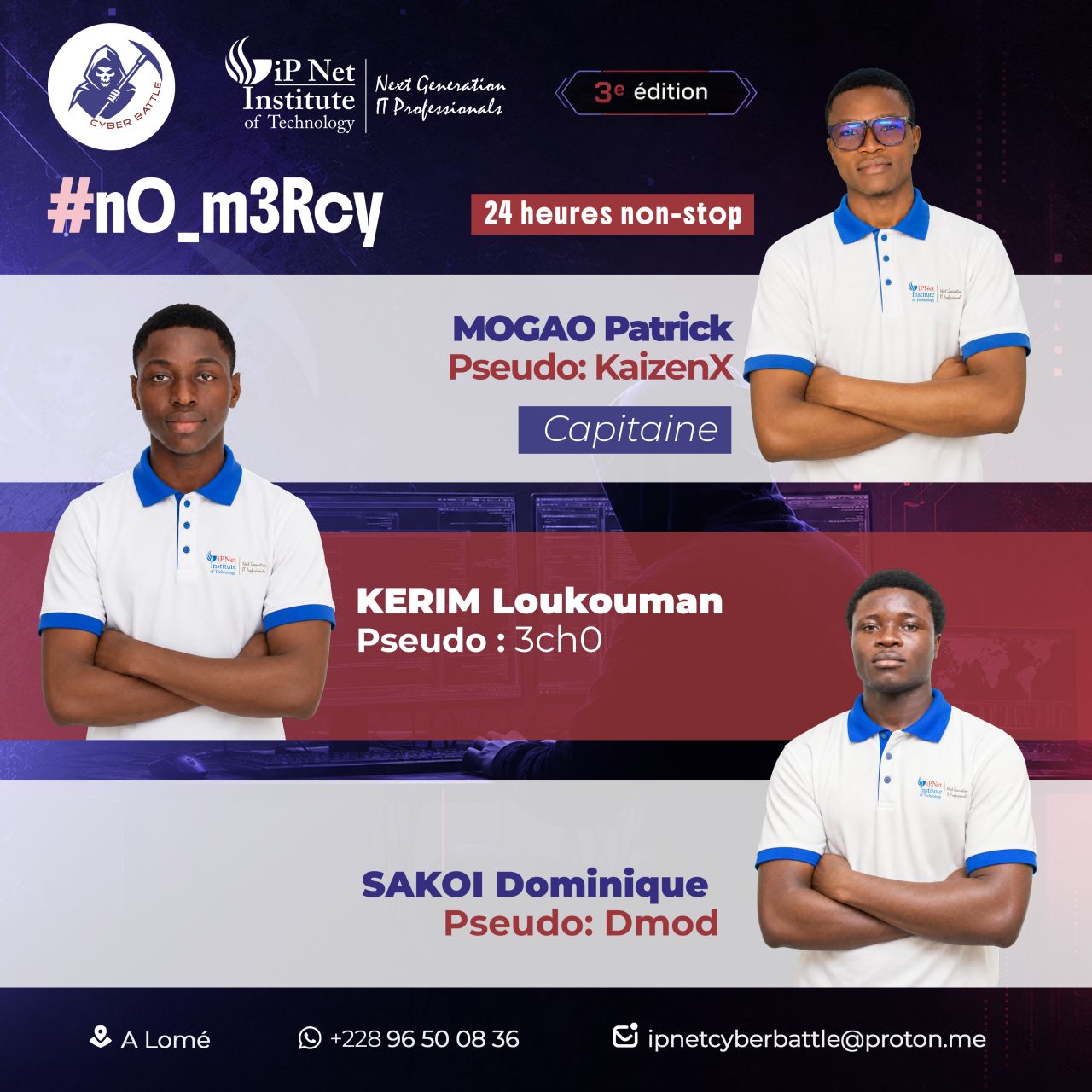
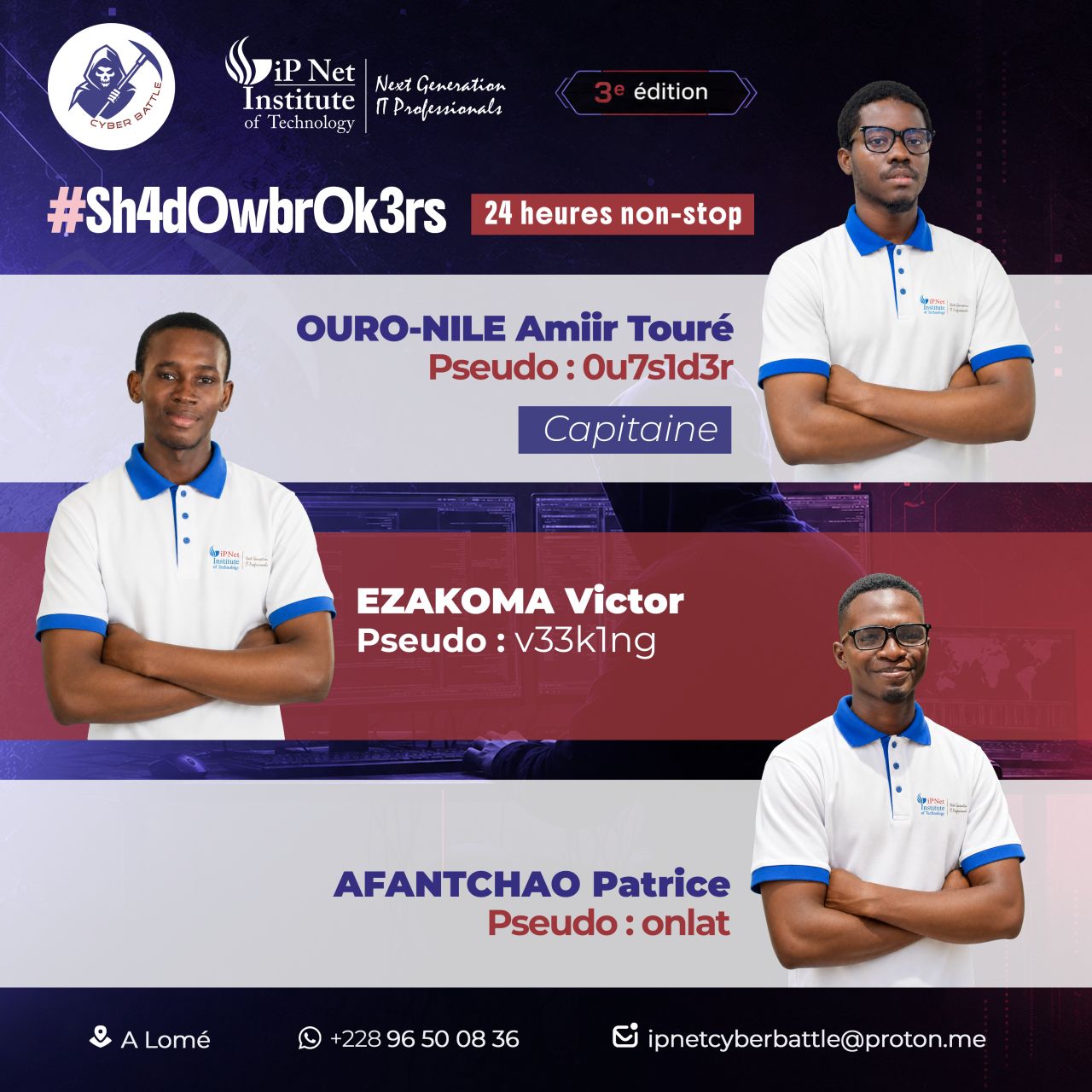
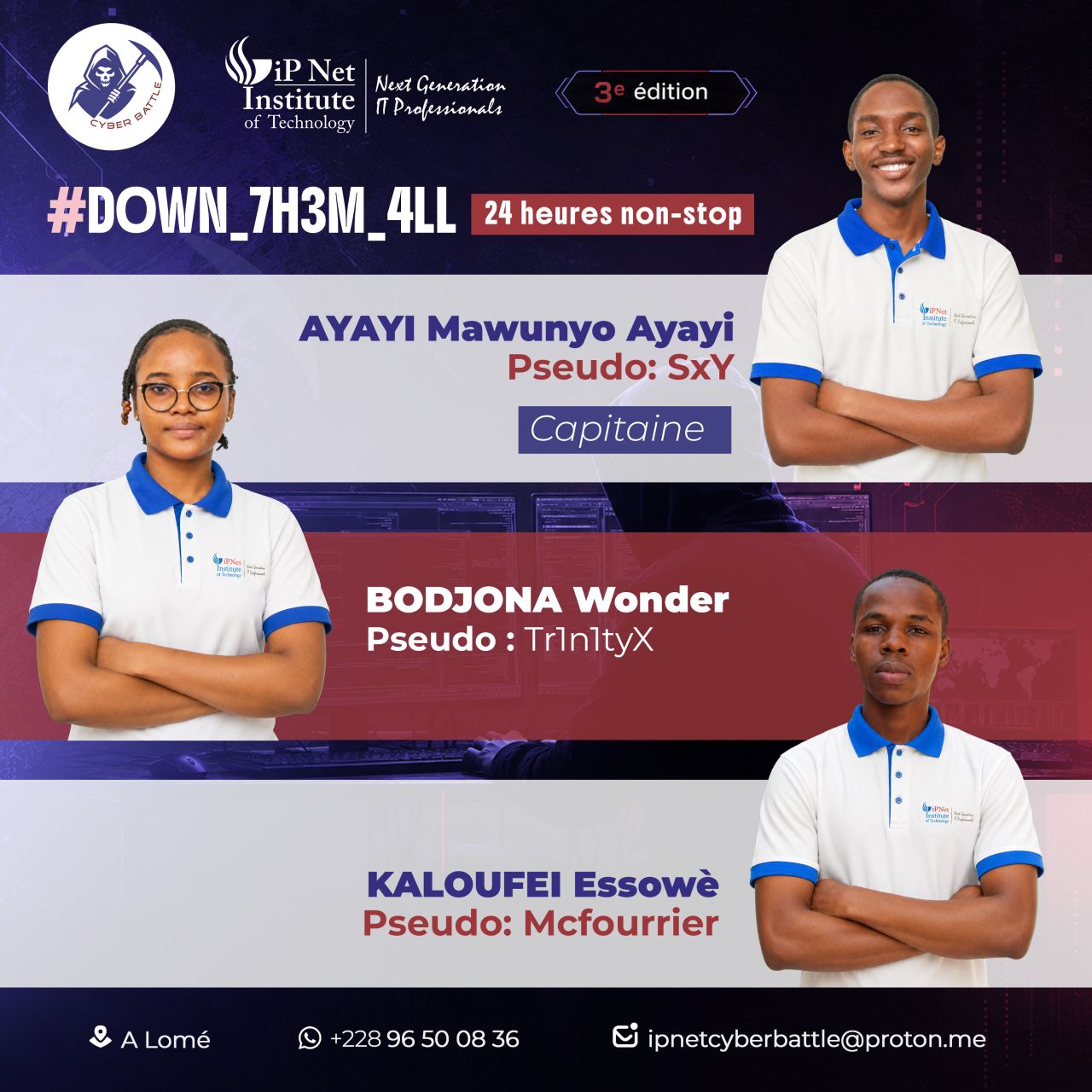
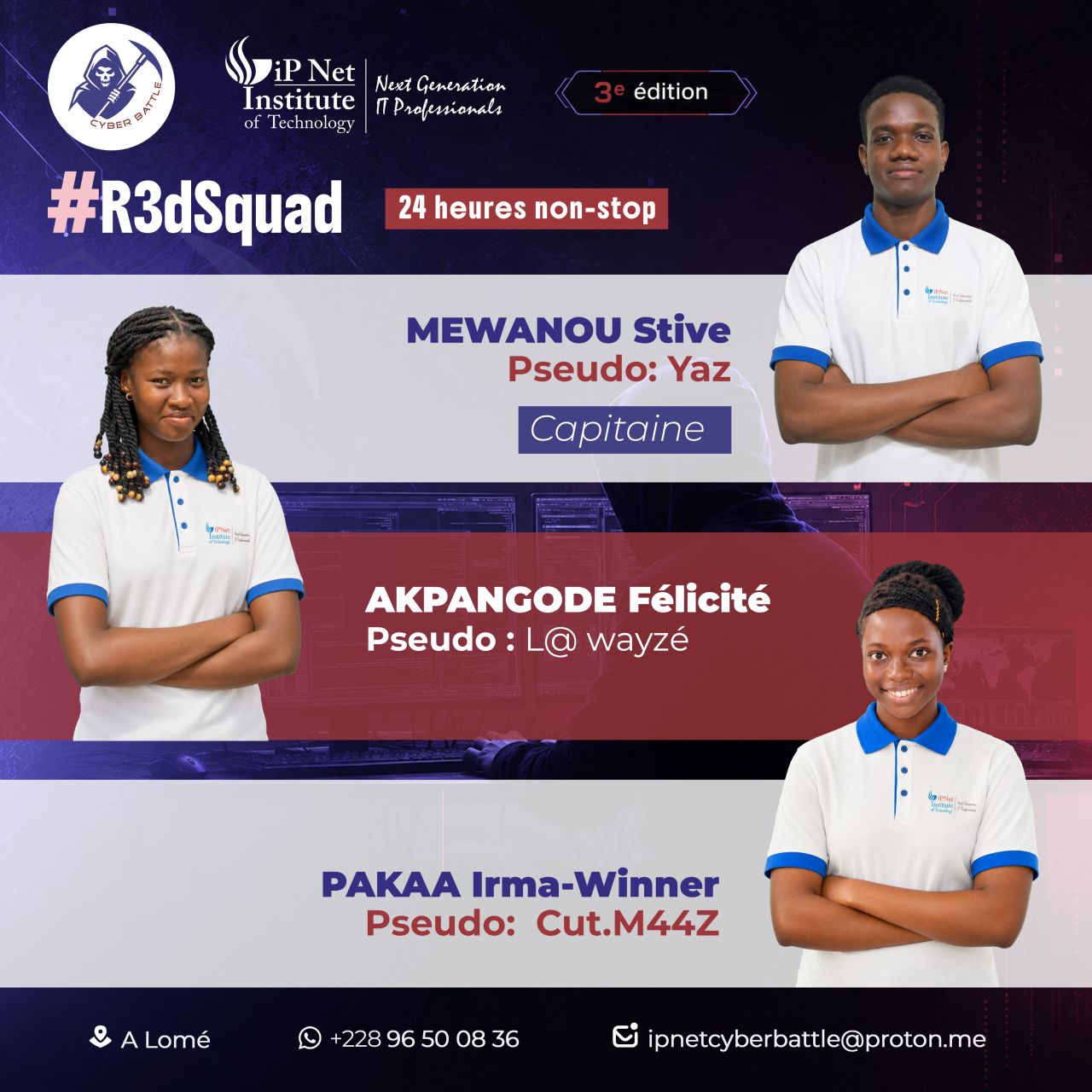
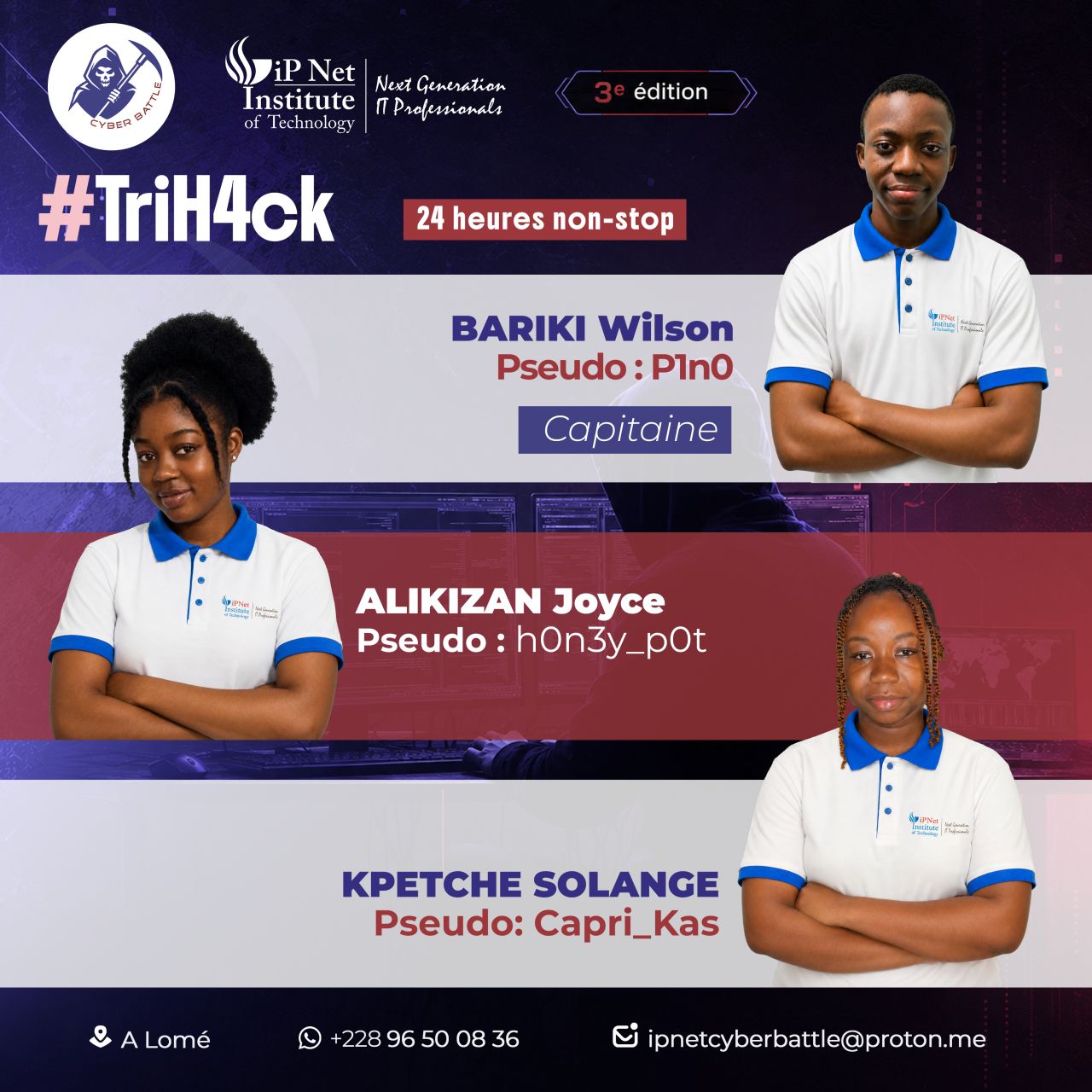
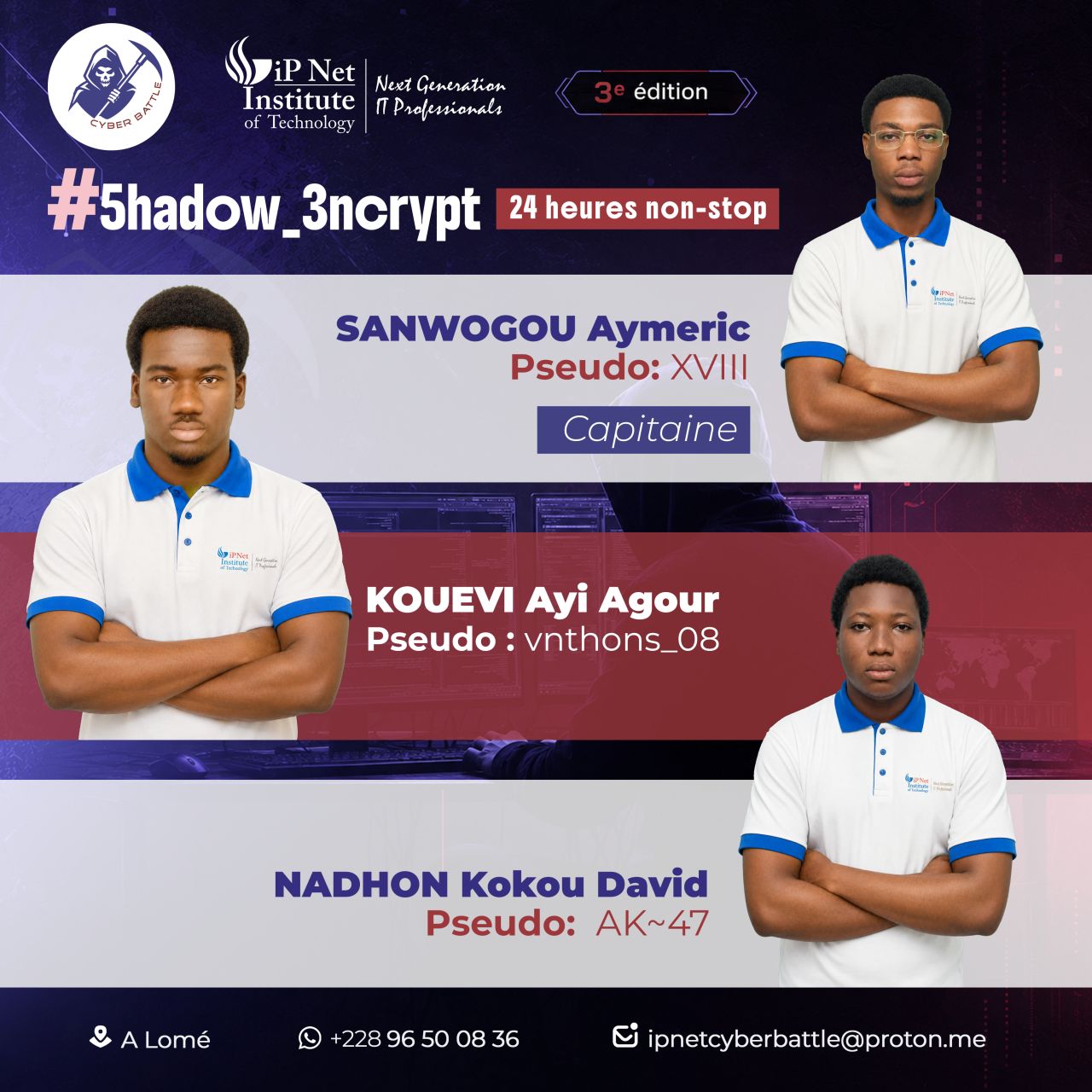
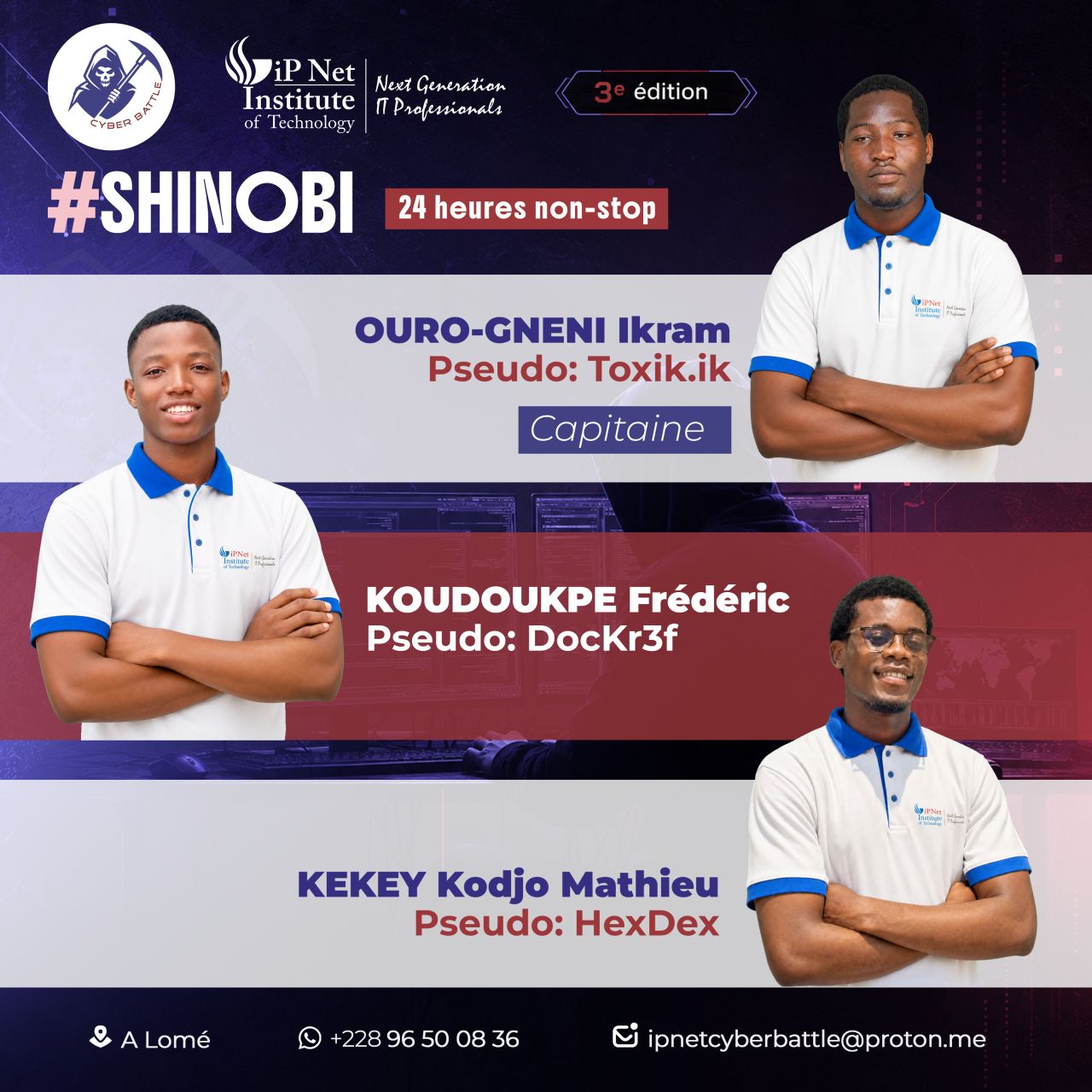
We introduced each team before the event instead of treating the players as anonymous names on a scoreboard. Chibrax2000 arrived with the idea that every flag was a victory and every challenge a lesson. DarkKernel wanted to master the environment from its core. TriH4ck described hacking as a way to learn, while Sh4d0wBr0wk3rs came with a much more direct line: they did not knock on doors, they walked through walls. These identities gave people someone to follow before the first flag was captured.
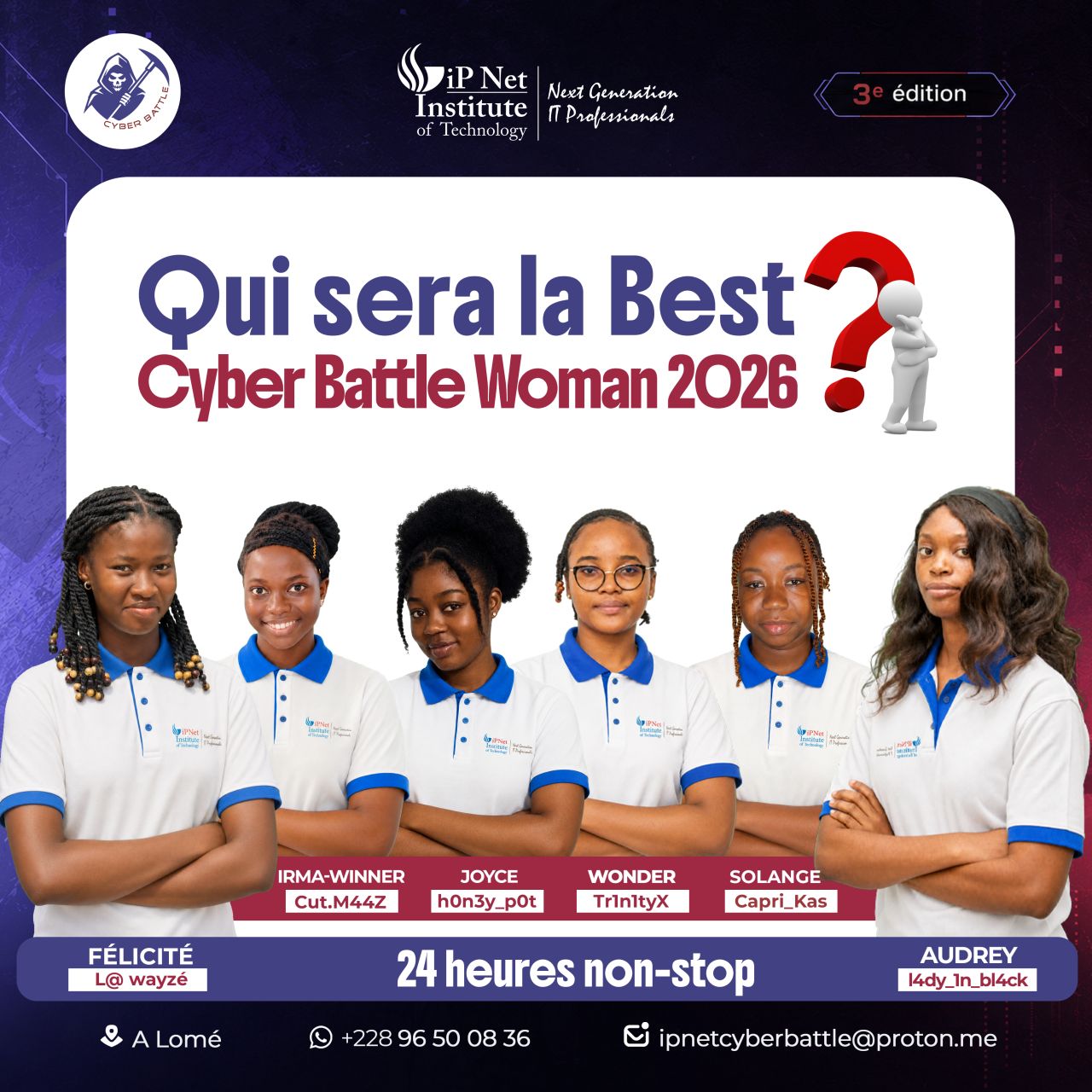
Six women entered across the teams: Félicité AKPANGODE, Maazah PAKAA, Essoréké ALIKIZAN, Essosolam T-Wonder BODJONA, Abla Solange KPETCHE and Audrey BATCHATI. Their participation led us to introduce a new individual distinction, Best Cyber Battle Woman 2026.
A continuous Jeopardy CTF remained at the center of the competition, with web, forensics, steganography and Boot2Root challenges. Several live rounds ran alongside it.
The first challenge was getting in
The opening did not go as smoothly as planned. Before several teams could attack a web challenge or inspect a forensic image, they first had to reach the competition platform.
The same moment appears in several participant accounts. Members of Chibrax2000, Cyber_Rangers and TriH4ck remember repeated connection attempts, page refreshes and a short period of confusion. Abdel Maaliki SITOU estimated that his team spent between ten and twenty minutes trying to access the interface. One participant later joked that connecting to the platform had become the first challenge of the day.
It was frustrating in the room, but it also changed the opening mood. Teams had to communicate and stay calm before the intended competition had even started. Once access stabilized, the 24-hour clock felt real.
The new live rounds
Code Review
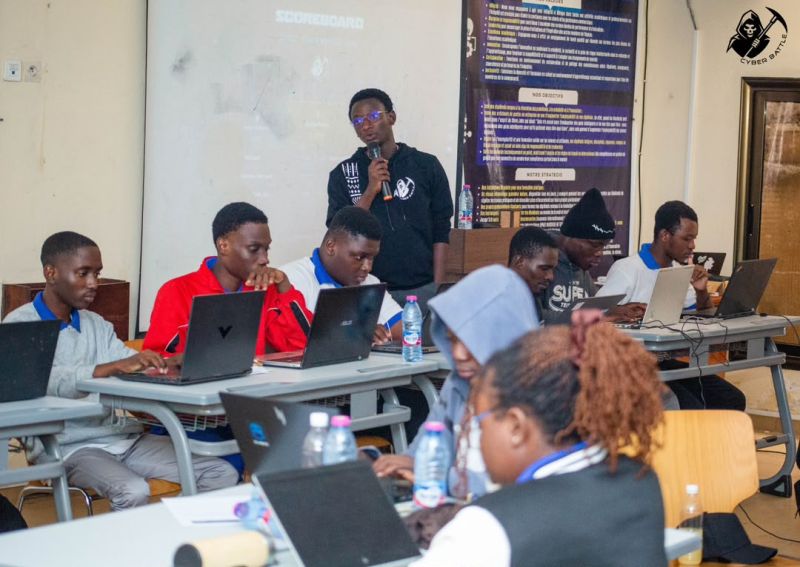
Each team appeared before the jury and received a piece of vulnerable code. The players had three minutes to identify the flaw, name it and explain how they would patch it. No computer and no AI. They had to read, reason and answer live.
For Abdel Maaliki SITOU of Cyber_Rangers, this was one of the most enjoyable rounds because code review was already part of his personal practice. It showed why we wanted several formats. A player who was not the fastest in a Jeopardy category could still become decisive when the challenge called for careful reading and a clear explanation.
Lockpicking
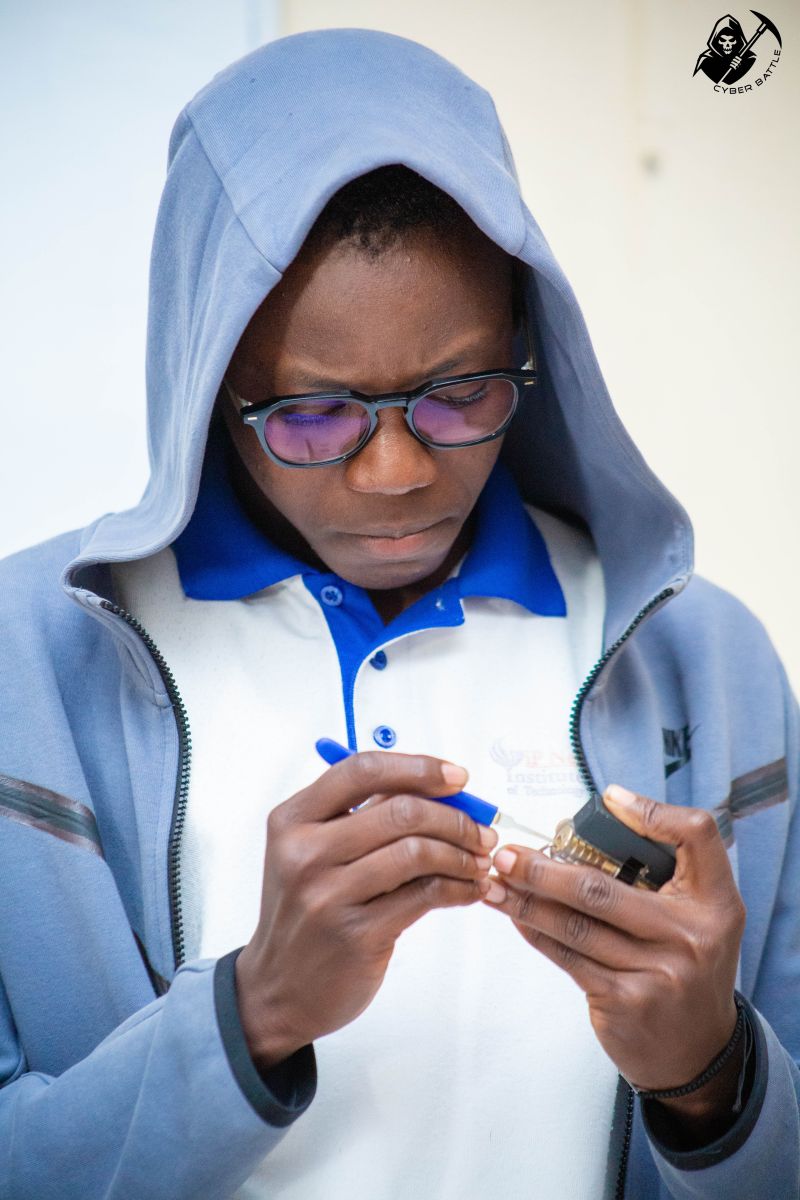
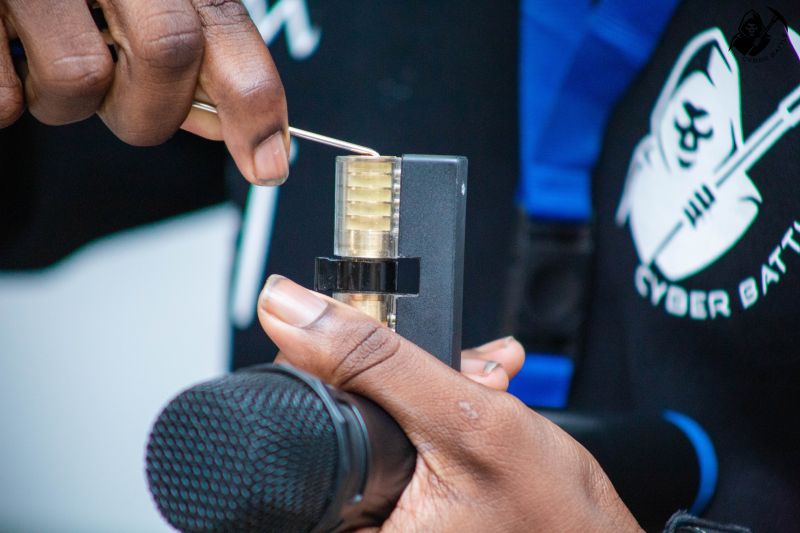
Cybersecurity discussions often leave physical security aside. Lockpicking brought it back into the competition. Participants had to move away from the terminal and work directly with locks.
The change of medium mattered. There was no command to rerun and no search result to consult. Competitors had to understand a mechanism with their hands while the clock kept moving. Some opened the lock. Others, as one participant put it, discovered that the padlock did not respect them.
Virtuoso Arena
For each selected Jeopardy category, every team chose its strongest player. Those specialists then faced the same challenge in a separate arena where AI was forbidden. The first three to solve it earned bonuses for their teams.
Ten players entered the arena without their teammates to cover a mistake. They had only their knowledge, their reasoning and the time available. Loukouman KERIM represented n0_m3Rcy in web security. Abdel Maaliki SITOU represented Cyber_Rangers in steganography. The round turned a team event into a direct technical confrontation for a few minutes.
Women Speed Run
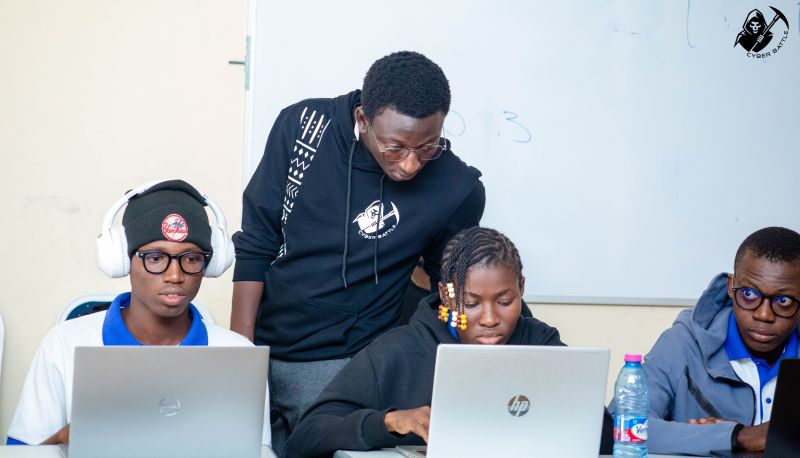
The women taking part competed in a dedicated speed round while their work throughout the full CTF also counted. The best overall performance earned the title Best Cyber Battle Woman 2026. The award was not intended as a symbolic mention. It recognized performance in the same demanding environment and gave that performance a visible place in the final ceremony.
The workshop
The morning began with a free workshop at IPNET Agbalépédo, from 8 a.m. to 1 p.m. It was open to the public, with registration limited to 50 places. This part of the event mattered to us because CYBER BATTLE should also serve people who are curious about cybersecurity but are not ready to enter a 24-hour CTF.
Seven speakers took part. Each brought a different view of cybersecurity, from first jobs and offensive security to ethics, leadership and national resilience.
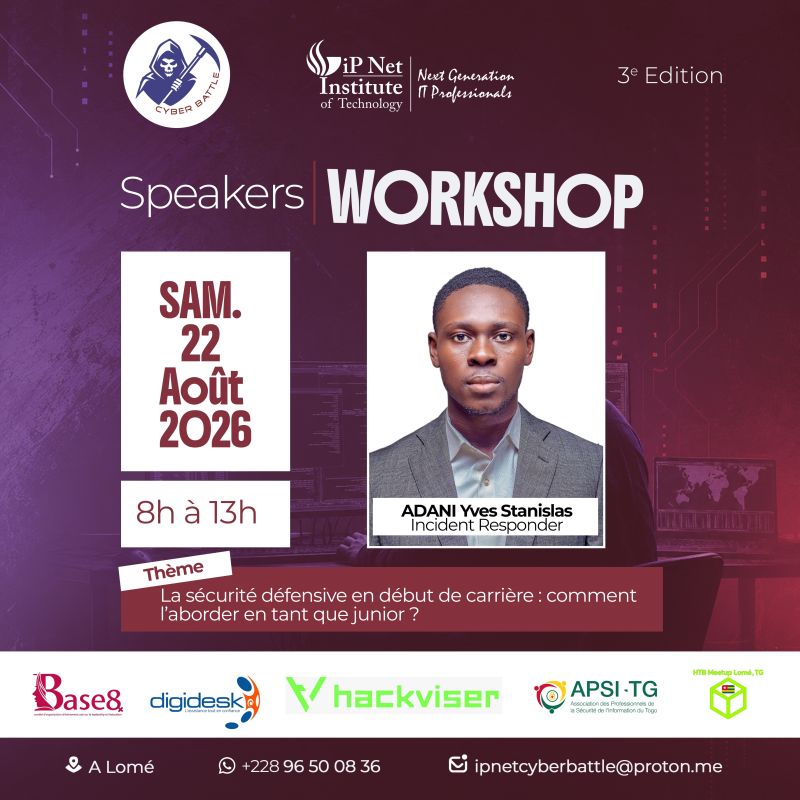
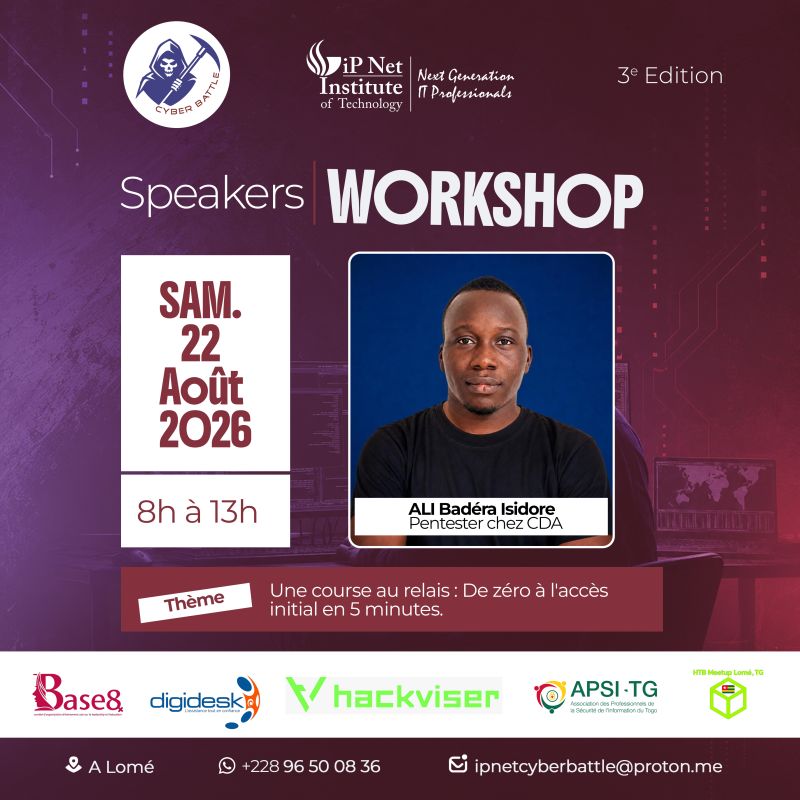
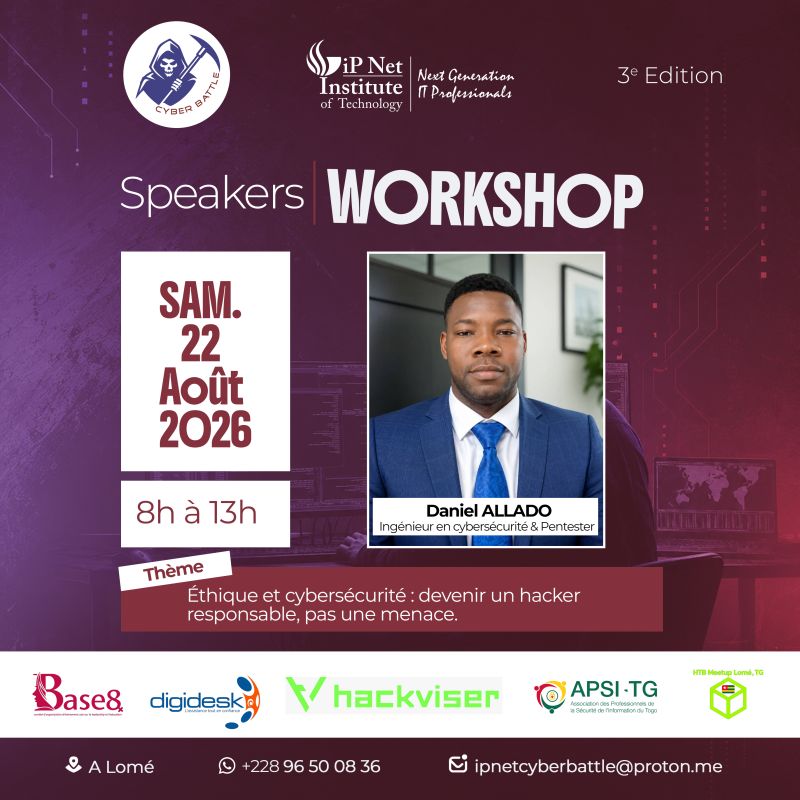
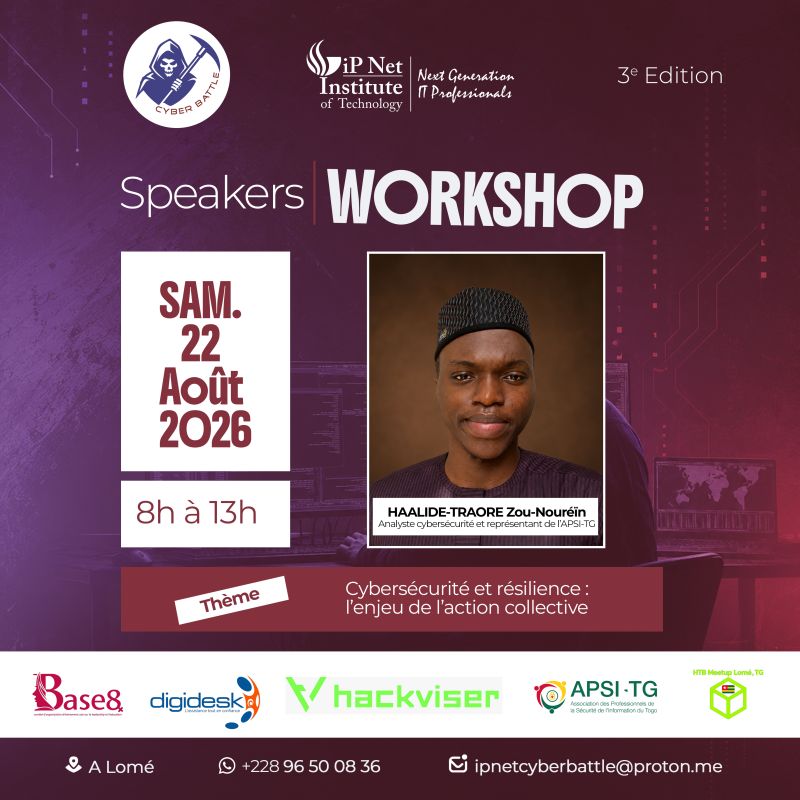
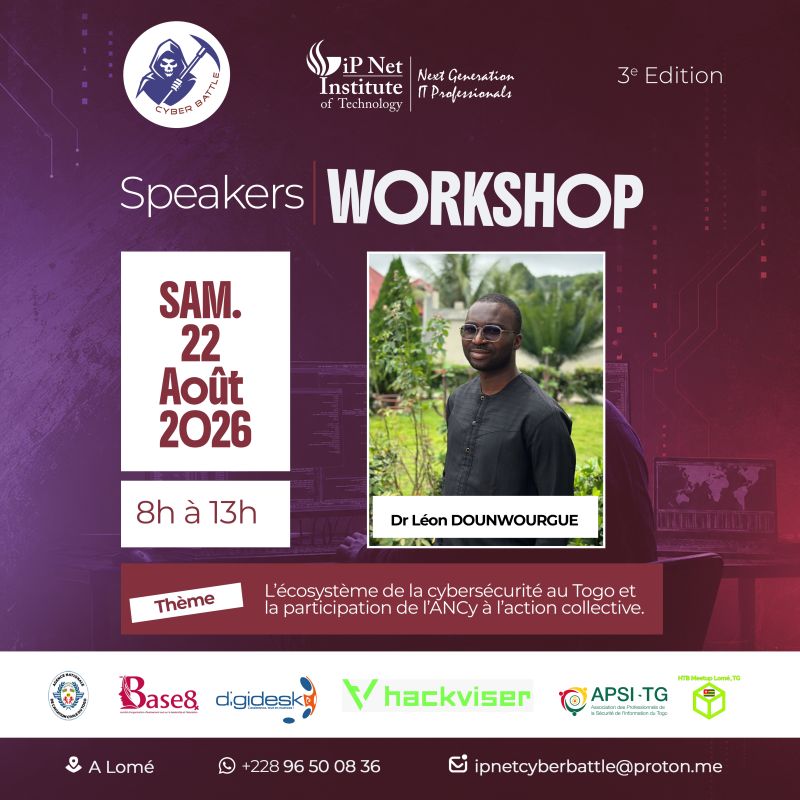
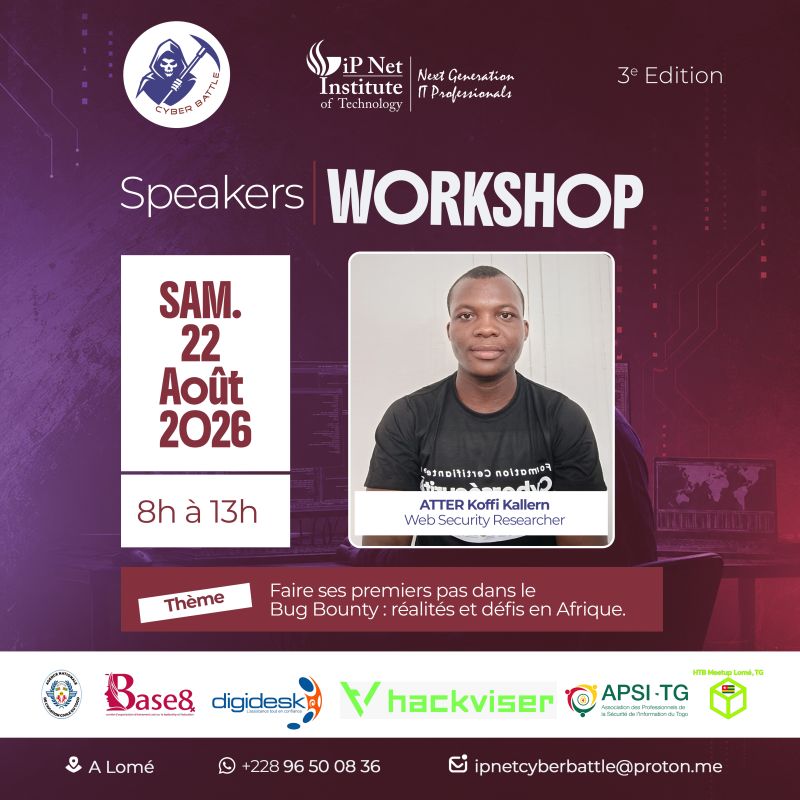
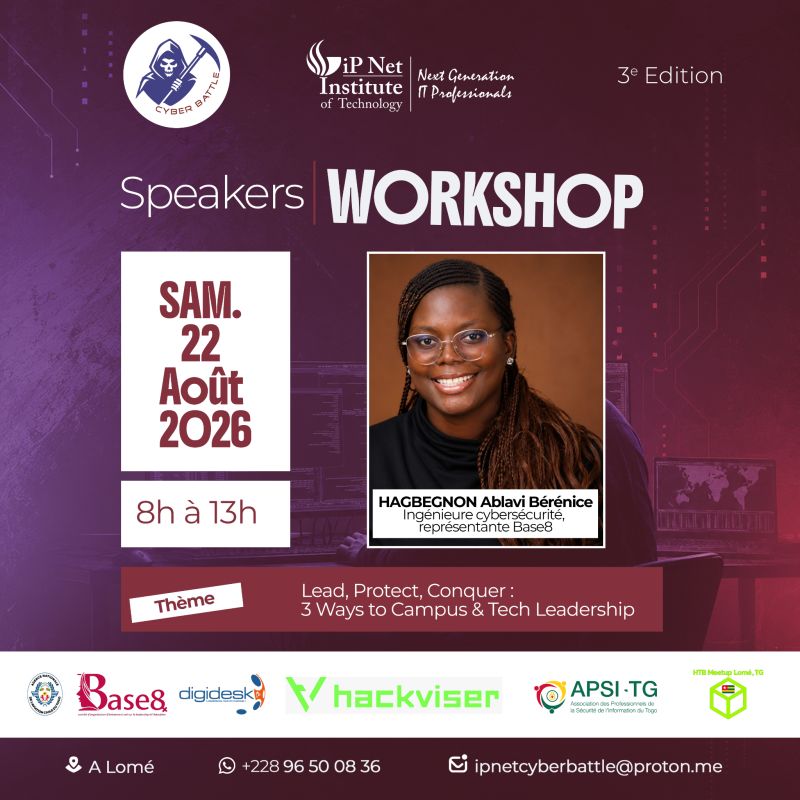
Zariétou OURO-SAMA hosted the morning. The format mixed talks, demonstrations and questions from students before the room shifted into competition mode.
Daniel ALLADO left the audience with a simple boundary: without authorization, there is no test. HAALIDE-TRAORE Zou-Nouréïn moved the discussion beyond tools and asked whether real resilience was possible without cooperation between people, companies and public institutions. Dr Nagbandjoa DOUNWOURGUE connected that question to Togo’s cybersecurity ecosystem and the role of the National Cybersecurity Agency.
The transition from workshop to competition was deliberate. The morning opened the field to people who were curious about cybersecurity. A few hours later, the competitors had to apply the same ideas under time pressure.
Organizing the event
This edition required more method than the previous one. We wanted stronger public visibility, better coverage of the players and enough food for at least 45 people across the full 24 hours.
Our communication goals included growing the club’s LinkedIn page to 1,000 followers and starting a TikTok series about the players. The idea was simple: every participant had a story, and the public needed a reason to care about the people behind the team names.
The event also relied on organizations that backed the initiative in different ways. The partners and supporters presented during the campaign included APSI-TG, BASE8, IPNET Institute of Technology, DigiDesk, Hack The Box Meetup Lomé and Hackviser.
Each partnership said something about the event we wanted to build. APSI-TG linked the competition to the professional cybersecurity community in Togo. BASE8 supported youth leadership and the participation of young women. Hack The Box Meetup Lomé brought a community of more than 580 members and experience from 25 events. Hackviser represented learning through practice. DigiDesk helped an initiative led by young people gain visibility, while IPNET Institute of Technology gave the project its home and its educational foundation.
The public campaign became part of the organization itself. We introduced the teams, announced the speakers one by one, explained the special rounds and gave the partners a reason for supporting the event. By the time the doors opened, the audience already knew some of the names and rivalries.
What 24 hours did to the teams
The first hours were technical. Later, the competition became just as much about energy, priorities and trust.
While one player entered the Virtuoso Arena or attempted the lockpicking round, the other team members still had to keep the Jeopardy CTF moving. Captains divided categories, decided when to abandon a bad lead and tried to keep everyone focused. Stive Dossa MEWANOU TOFFON, captain of RedSquad, later described the job as coordinating efforts, identifying priorities and maintaining the team’s momentum once fatigue set in.
The participant accounts are consistent on this point. Flags mattered, but the lasting lesson was how to keep working after a failed approach. Teams searched, tested, got stuck, changed direction and started again. The pressure exposed communication problems quickly. It also made good teamwork impossible to miss.
Results
After 24 hours, the final podium was:
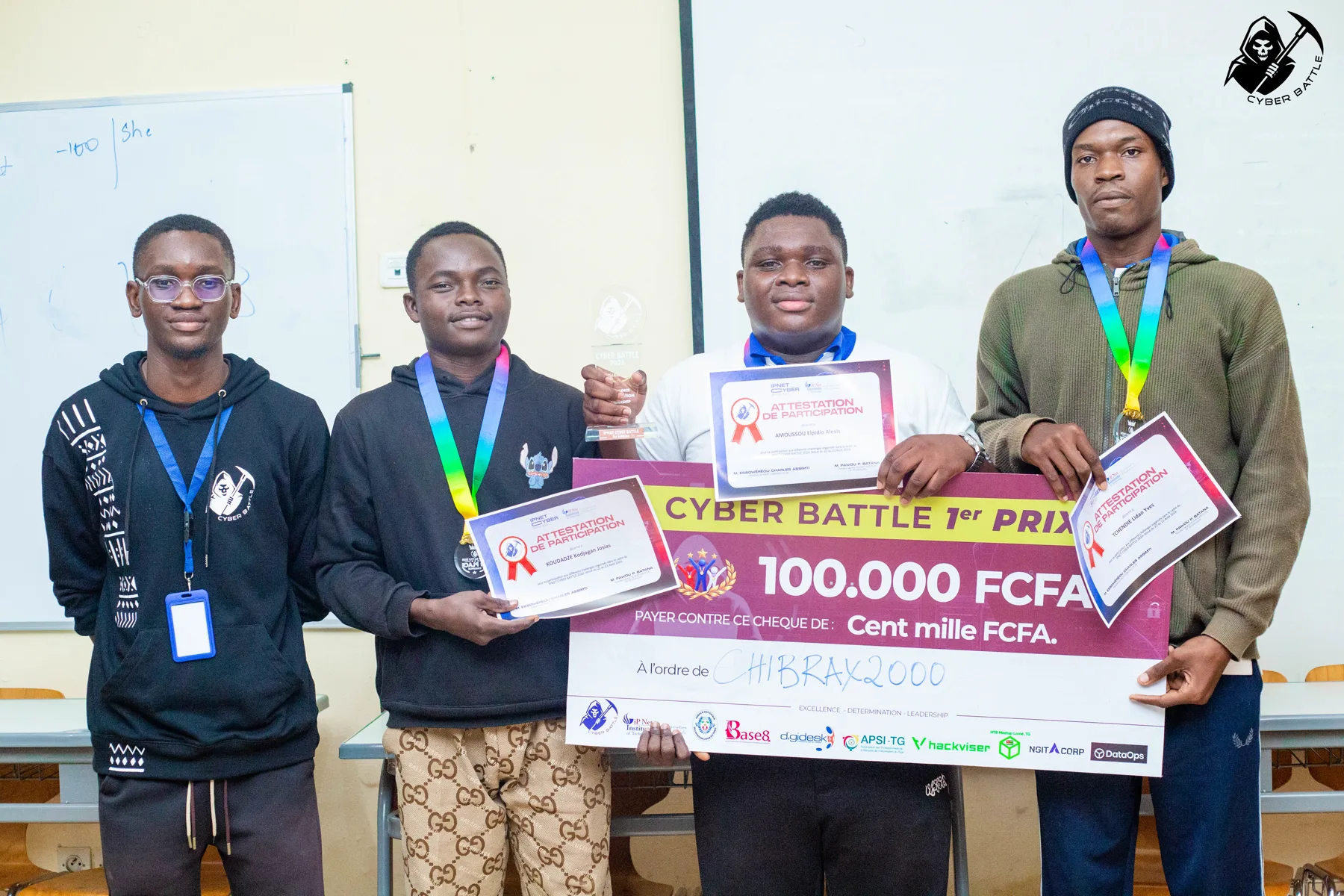
- Chibrax2000, first place and a prize of 100,000 FCFA.
- n0_m3Rcy, second place.
- Cyber_Rangers, third place.
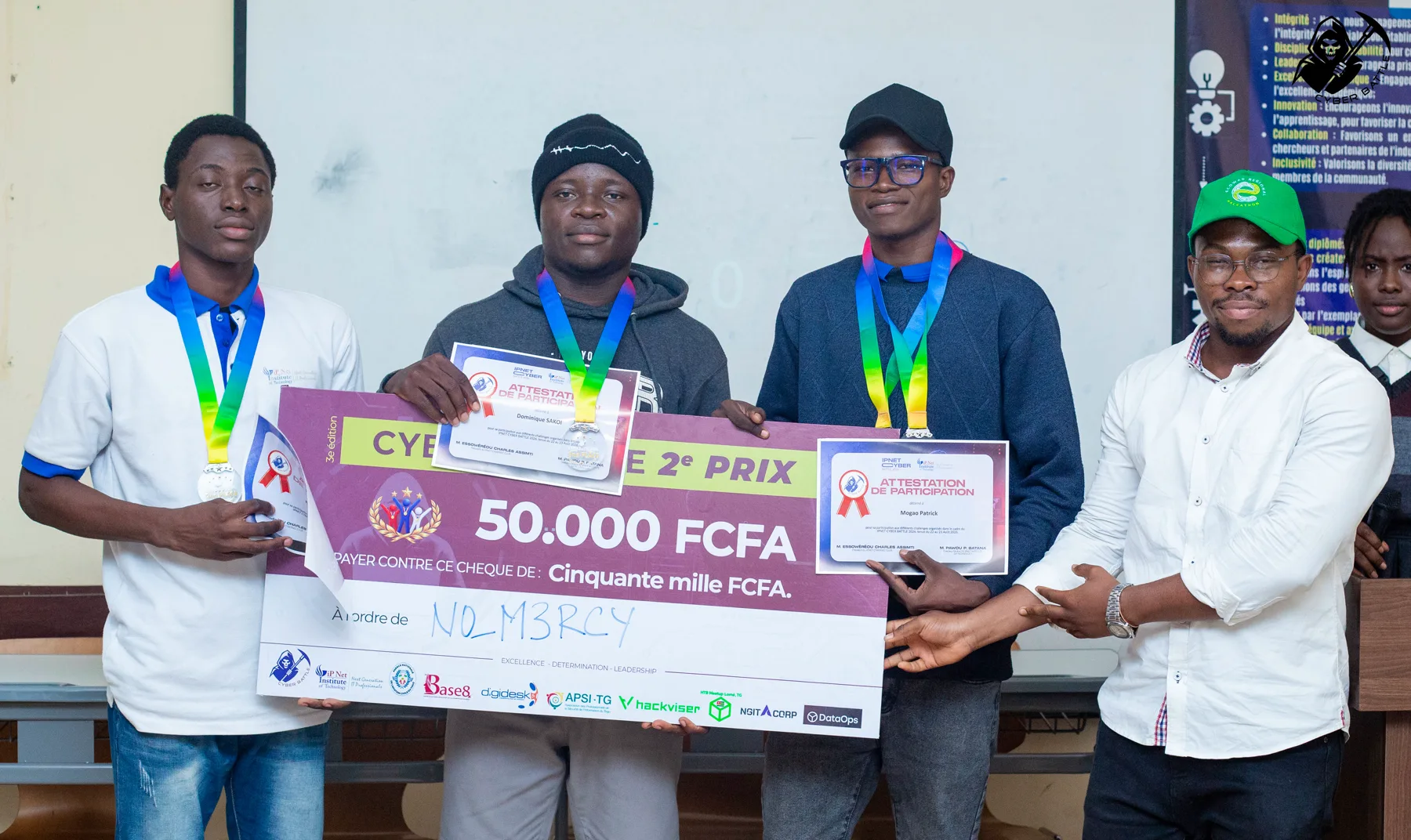
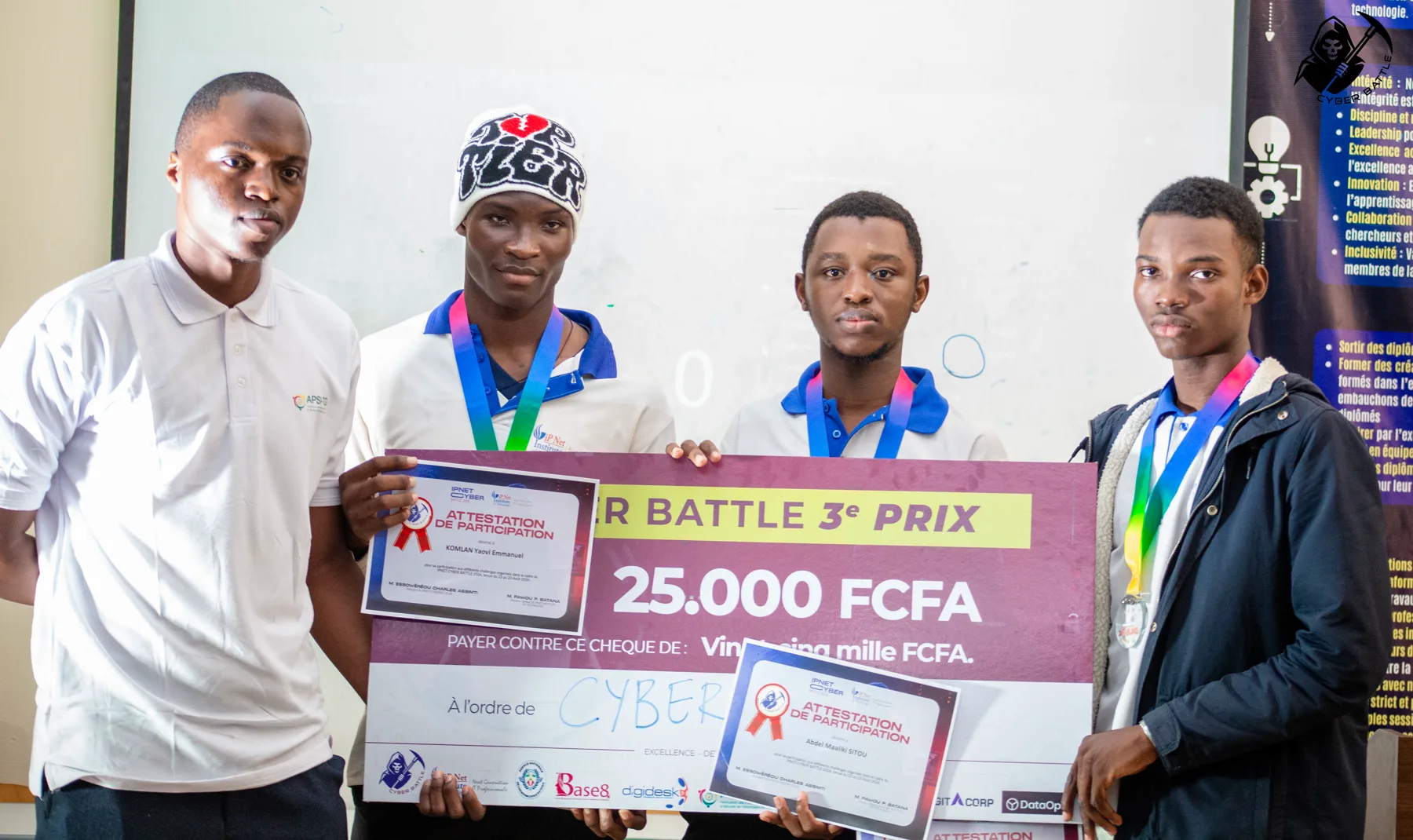
Two individual awards recognized performances outside the team ranking:
- Best Cyber Battle Woman 2026: Audrey BATCHATI, captain of DarkKernel.
- Blood Hunter: Patrick MOGAO of n0_m3Rcy.
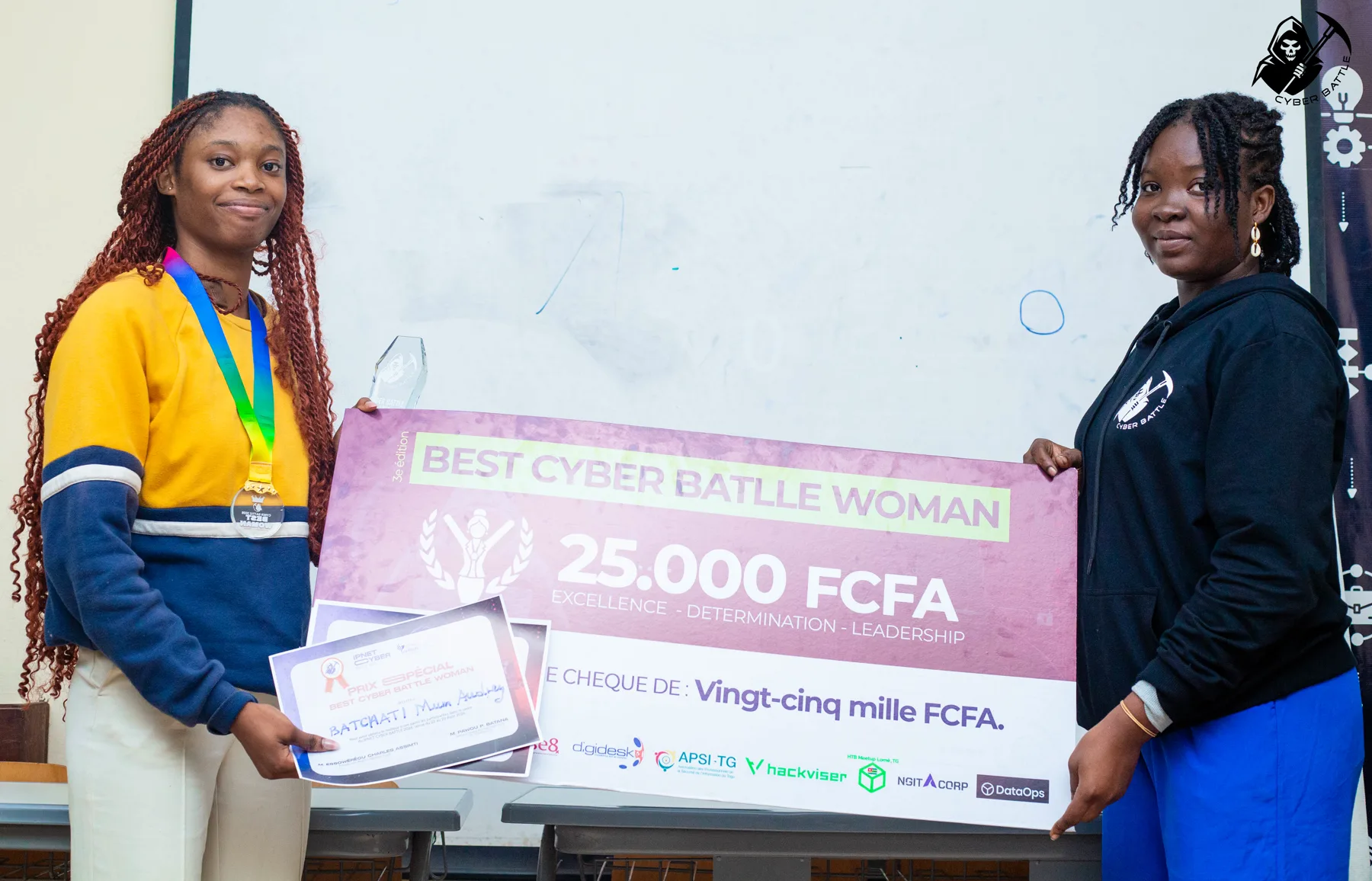
Chibrax2000 won 100,000 FCFA. Its members were Elpidio Alexis AMOUSSOU, Kodjogan Josias KOUDADZE and Tchamiye Lidao Tchendie. n0_m3Rcy brought together Dominique-Savio SAKOI, Patrick MOGAO and Loukouman KERIM. Cyber_Rangers was formed by Yendoubouame Joseph NAKORE, Abdel Maaliki SITOU and Yaovi Emmanuel KOMLAN.
Patrick MOGAO left with both the second-place team result and the Blood Hunter distinction. Audrey BATCHATI captained DarkKernel with Joël Ekoue KOUVAHE and Essognim Marcel Jr KASSANG before receiving the Best Cyber Battle Woman award.
What I am taking into 2027
The 2026 edition proved that CYBER BATTLE can be more than a scoreboard. The workshop brought new people into the conversation. The team campaign made the competitors visible. Lockpicking, Code Review, Women Speed Run and Virtuoso Arena tested abilities that a standard Jeopardy board would have missed.
It also showed us where the event needs to improve. Platform access must be tested under conditions closer to the real opening rush. A 24-hour format needs clearer night supervision, better-defined handovers and a food plan that treats logistics as part of the competition. Communication should continue during the event, not only before it, because the public story is happening while the teams are solving challenges.
The best evidence came after the closing ceremony. Participants wrote about the failed attempts, the stress, the jokes, the locks that refused to open and the teammates who kept them going. They did not describe a perfect event. They described one they remembered.
That is the standard for 2027: keep the technical level high, fix the rough edges and give more young people a place where they can find out what they are capable of.